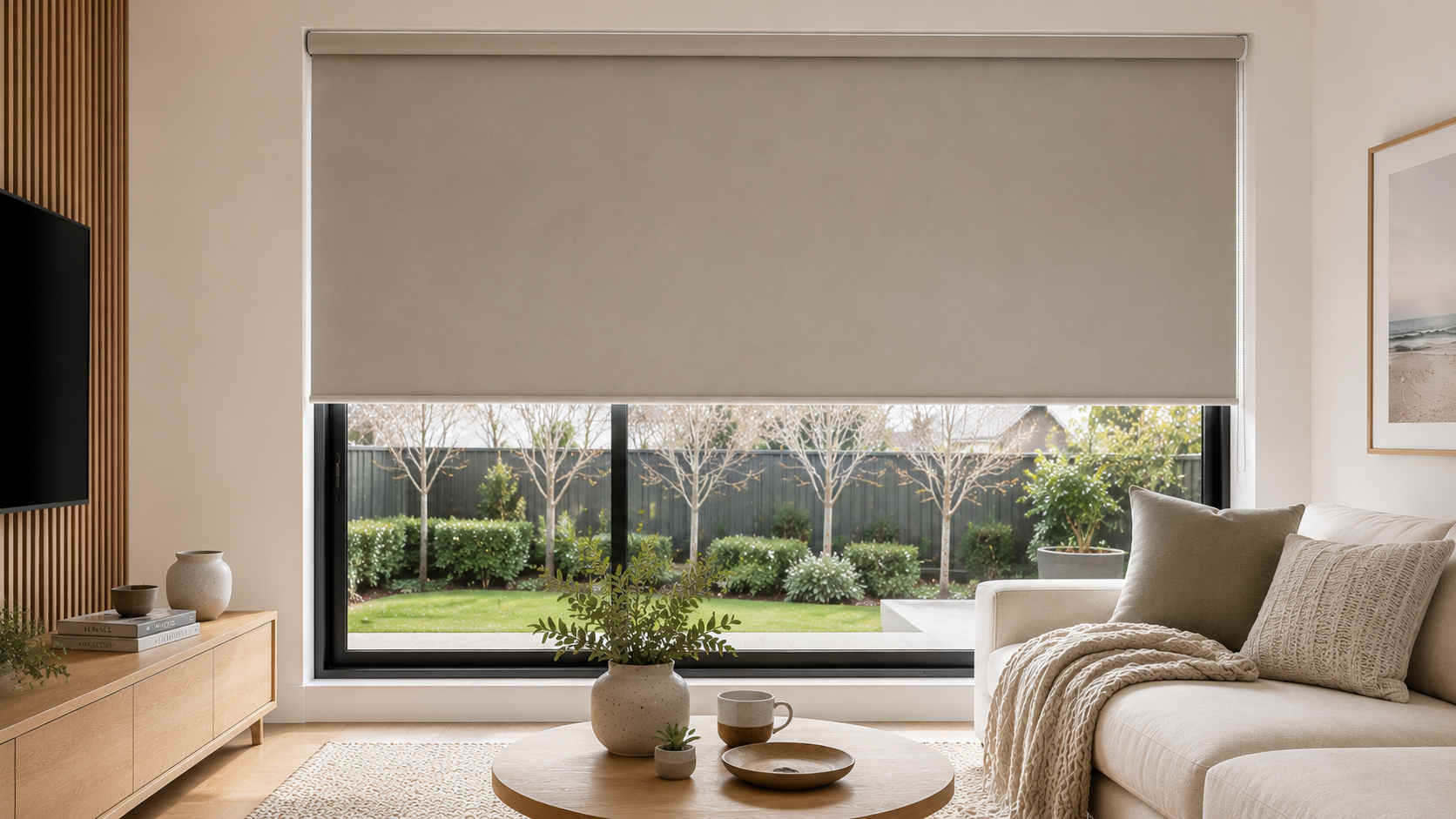
Yes, roller blinds can help keep homes warmer in winter by providing an additional layer between the window and the room. They help reduce heat loss through glass, improve insulation, and minimise the impact of cold window surfaces. However, their effectiveness depends on the fabric type, fit, and installation.
In this guide from Country Blinds, you will learn how roller blinds work in winter, what features affect their insulation performance, and how they compare with other window coverings for maintaining indoor warmth.
Windows are one of the largest sources of heat loss during winter. Glass transfers heat more easily than insulated walls, allowing warmth to escape from inside the home. In addition, small gaps around windows can allow cold air to enter.
As a result, heating systems need to work harder to maintain comfortable indoor temperatures. Therefore, improving window insulation can make a noticeable difference during colder months.
Roller blinds are simple window coverings made from a single piece of fabric that rolls up and down using a tube mechanism. They are popular because they offer a clean appearance, easy operation, and a wide range of fabric options.
While many people choose roller blinds for privacy and light control, they can also contribute to winter comfort by helping reduce heat transfer through windows.
Roller blinds help improve insulation by creating a barrier between the room and the window that slows down heat loss. Their fabric reduces heat transfer, while the small air gap between the blind and the glass provides additional insulation. As a result, rooms stay warmer for longer, cold drafts are reduced, and heating systems do not need to work as hard during winter.
Roller blinds improve winter comfort through several design and material features that help reduce heat loss.
Roller blinds cover a large portion of the window surface when fully lowered.
How it works: The fabric creates a barrier between the warm indoor air and the cold glass. This helps reduce direct heat transfer through the window.
Result: Rooms retain warmth more effectively, especially during colder evenings and overnight periods.
Glass naturally allows heat to move from warm areas to cold areas.
How it works: When roller blinds are closed, they create an additional layer that slows down the movement of heat through the window.
Result: Less indoor heat escapes, helping maintain a more stable room temperature.
Cold air often enters through small gaps around windows.
How it works: A properly fitted roller blind helps reduce airflow around the window area and limits the movement of cold air into the room.
Result: Rooms feel less drafty and more comfortable during winter.
Not all roller blinds use the same fabric.
How it works: Some roller blinds use thicker or specially designed thermal fabrics that provide better insulation than standard materials.
Result: These fabrics help improve heat retention and support greater winter energy efficiency.
Blockout roller blinds are commonly used in Australian homes.
How it works: Their dense fabric creates a stronger barrier against heat loss compared to light-filtering fabrics.
Result: Homes can retain warmth more effectively during colder weather.
Blockout fabrics provide the highest level of insulation among standard roller blind options.
They help:
Sunscreen fabrics allow visibility and natural light.
They help:
As a result, they are generally less effective for winter warmth than blockout fabrics.
Some roller blinds are specifically designed with thermal properties.
They help:
Therefore, they are often the best choice when winter performance is a priority.
Even the best roller blinds perform better when certain conditions are met.
Blinds that fit closely to the window help minimise gaps where heat can escape.
Covering the entire window area improves insulation performance.
Keeping blinds closed during cold evenings and overnight periods helps retain warmth more effectively.
Single-glazed windows lose more heat than double-glazed windows. Roller blinds can help improve comfort regardless of window type.
Provide simple insulation, modern styling, and easy operation.
Offer additional insulation through thicker fabric and trapped air layers.
Use air-trapping cells that provide stronger insulation than standard roller blinds.
Help reduce drafts through their solid structure and close-fitting design.
As a result, roller blinds provide good winter performance, although specialised insulation products may offer higher thermal efficiency.
For the best winter results:
Besides helping reduce heat loss, roller blinds also offer several other advantages:
Yes, roller blinds can help reduce heat loss through windows and improve indoor comfort during winter.
Yes, blockout roller blinds generally provide better insulation than lighter fabrics because of their dense material.
They can help reduce drafts around windows, especially when fitted correctly and used consistently.
Honeycomb blinds usually provide stronger insulation because their cellular design traps air. However, roller blinds still improve winter comfort.
Closing roller blinds during cold evenings and overnight periods can help reduce heat loss and retain indoor warmth.
Roller blinds can help keep homes warmer in winter by reducing heat transfer, limiting drafts, and creating an additional barrier over windows. While their insulation performance varies depending on fabric type and installation, they remain a practical and effective option for improving winter comfort in Australian homes.
Keep your home warmer this winter with custom roller blinds from Country Blinds.
 Optimized by Seraphinite Accelerator

 FREE QUOTE
 Window Furnishings
 Room Visualiser
 Flooring
 Warranty
 Services
 Commercial
 About
About